
Most people clean the lint trap, shut the door, and move on with their day. That tiny habit does a lot of good—but it’s only part of the story. Over time, lint slips past the screen, settles into places you can’t see, and slowly makes your dryer work harder than it should.
A properly cleaned dryer runs more efficiently, dries clothes faster, and stays safer. The good news is that this isn’t complicated, intimidating, or time-consuming. It just requires knowing where to look.
Why dryer cleaning matters
Every load of laundry creates lint. Even with a lint screen in place, tiny fibers escape and build up inside the dryer and vent system. As airflow becomes restricted, heat has nowhere to go. Clothes take longer to dry, energy use increases, and the dryer runs hotter than it should.
Over time, this buildup can lead to overheating, unpleasant smells, unnecessary wear on the machine, and increased fire risk. Dryer maintenance isn’t about being fussy—it’s about keeping a hardworking appliance running the way it was designed to.
Start with the lint screen—but go a step further
Cleaning the lint screen after every load is essential, but it’s not enough on its own. About once a month, remove the screen and wash it with warm water and a small amount of dish soap. Dryer sheets can leave a nearly invisible residue that blocks airflow even when the screen looks clean. Let the screen dry completely before putting it back.
While the screen is out, take a moment to vacuum inside the lint trap opening. This is where a surprising amount of lint collects, and most people never think to look there.
Pull the dryer away from the wall
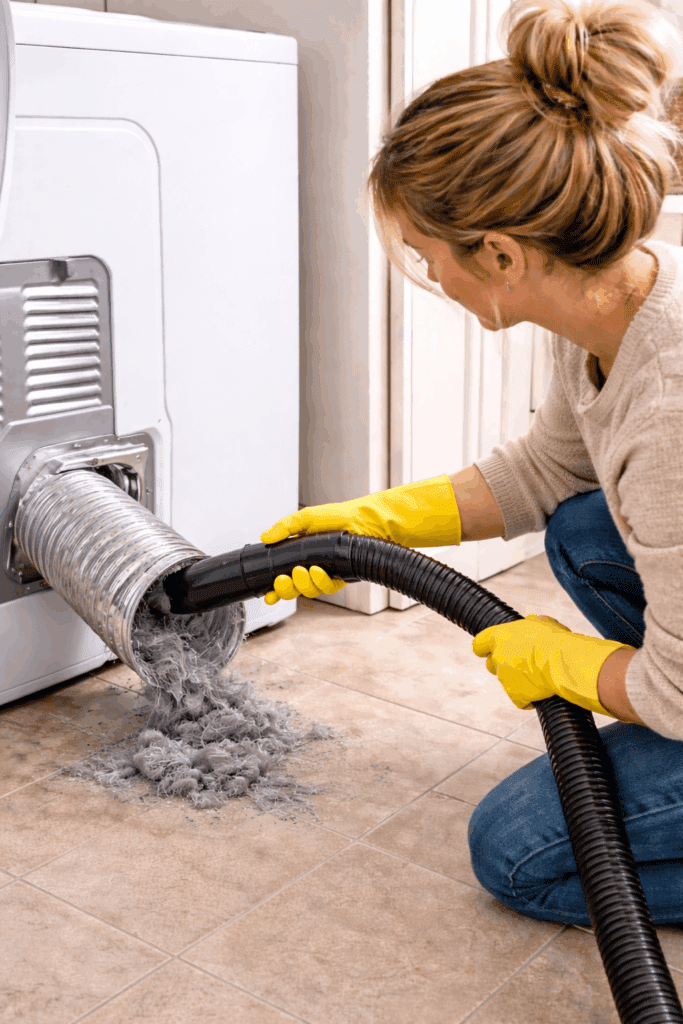
Before going any further, unplug the dryer for safety. Gently pull it away from the wall so you can access the vent hose at the back. This hose carries hot, moist air outside, and it’s one of the most common places for lint to build up.
Disconnect the hose from the dryer and look inside. Vacuum what you can, then use a dryer vent brush or flexible cleaning tool to loosen compacted lint. If the hose is crushed, sagging, or made of thin foil material, replacing it with a sturdier option can dramatically improve airflow.
Don’t forget the outside vent
Many dryer problems actually start outside the house. Walk around to where your dryer vents outdoors and check that the flap opens and closes freely. Remove any visible lint, leaves, snow, or debris. In colder climates especially, this vent can become blocked without anyone noticing, forcing heat and moisture back into the dryer.
Clean the inside of the dryer
Finish up by wiping down the inside of the dryer drum and around the door seal with a damp microfiber cloth. This removes dust, residue, and lingering odors. It’s a small step, but it makes the dryer feel fresher and more complete—like resetting the machine.
How often should this be done?
Lint screens should be cleaned after every load. Washing the screen and vacuuming the lint trap slot once a month keeps airflow strong. A deeper vent cleaning once or twice a year is usually enough for most households, though homes with pets or heavy laundry use may benefit from more frequent attention.
If clothes are suddenly taking longer to dry, the dryer feels unusually hot, or you notice a dusty or burning smell, those are signs it’s time to clean sooner rather than later.
A simple habit that pays off
Cleaning out your dryer isn’t glamorous, but it’s one of those small maintenance tasks that quietly improves everyday life. Clothes dry faster. Energy bills stay lower. The machine lasts longer. And most importantly, your home stays safer.
A well-cared-for home isn’t about perfection—it’s about systems that work the way they’re supposed to, without adding stress to your day.