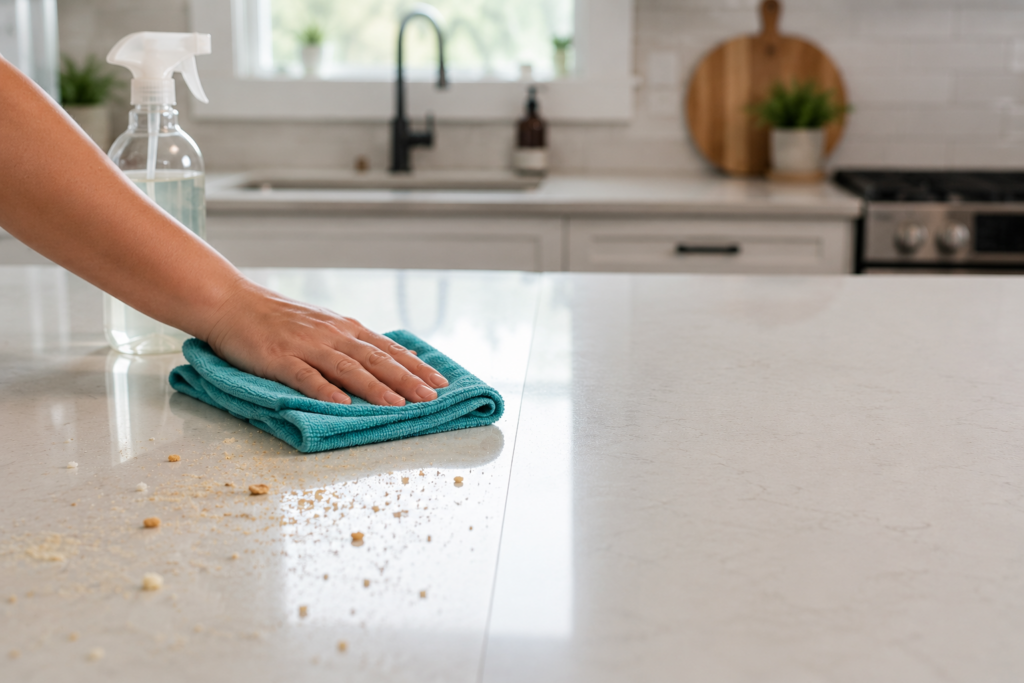
You wipe down the kitchen counter.
It looks spotless.
But is it actually clean? Sanitized? Disinfected?
Those words are often used interchangeably, but they don’t mean exactly the same thing.
Understanding the difference can help you make smarter decisions about how you care for your home—and it may even save you from using stronger cleaning products when you don’t need them.
First: What Does Cleaning Actually Mean?
Cleaning is the process of removing dirt, dust, crumbs, grease, and other debris from a surface.
Think about:
- Wiping crumbs from a countertop
- Removing soap scum from a shower
- Vacuuming pet hair from carpet
- Mopping dirt from a kitchen floor
- Dusting furniture
Cleaning physically removes much of what has accumulated on a surface.
And in most areas of the home, regular cleaning is exactly what you need.
What Does Sanitizing Mean?
Sanitizing goes a step beyond simply removing visible dirt.
Sanitizing is intended to reduce the number of germs on a surface to a safer level.
This can be especially useful on surfaces that are touched frequently or come into contact with food.
Examples might include:
- Kitchen counters
- Certain food-preparation surfaces
- Children’s high chairs
- Frequently touched household surfaces
It’s important to follow the directions on any sanitizing product you use, including the recommended amount of time the surface needs to remain wet.
What About Disinfecting?
Disinfecting is different again.
Disinfectants are designed to kill certain germs on surfaces when used according to the product’s directions.
You may choose to disinfect certain high-touch surfaces when someone in the household is sick or when there’s a particular reason you’re concerned about the spread of illness.
But that doesn’t mean every surface in your home needs to be disinfected every day.
Cleaning Usually Comes First
Here’s something that’s easy to miss:
A dirty surface often needs to be cleaned before it can be properly sanitized or disinfected.
Imagine spraying disinfectant onto a kitchen counter covered in crumbs and grease.
You haven’t removed the mess underneath.
Cleaning first removes the physical dirt and residue so that any additional product can be used as intended.
Not Everything Needs to Be Sanitized
Your coffee table probably doesn’t need the same treatment as a kitchen food-preparation area.
Your bedroom baseboards don’t need to be disinfected every afternoon.
And your living room floor doesn’t need to become a sterile environment.
Homes are meant to be lived in.
The goal is to focus extra attention where it actually makes sense rather than trying to sanitize every square inch of the house.
Pay Attention to High-Touch Areas
Some surfaces are touched dozens of times each day without us even thinking about it.
These include:
- Door handles
- Light switches
- Faucet handles
- Refrigerator handles
- Cabinet pulls
- Remote controls
Regularly cleaning these areas helps remove fingerprints, oils, dirt, and everyday buildup.
When illness is going around the household, some high-touch surfaces may also be appropriate to disinfect according to product directions.
The Kitchen Deserves Special Attention
The kitchen is one room where understanding the difference between cleaning and sanitizing is especially helpful.
Raw meat, food spills, dirty hands, and frequent cooking all create opportunities for contamination.
Keeping counters, sinks, cutting boards, and other food-preparation surfaces properly cleaned is important.
When sanitizing is appropriate, always make sure the product you’re using is suitable for that particular surface and follow the label instructions.
Bathrooms Are Another High-Priority Area
Bathrooms naturally contain moisture and receive frequent use.
Toilets, sinks, faucets, and other high-touch areas benefit from regular, thorough cleaning.
Removing visible dirt, soap residue, hair, and buildup is an important first step before using sanitizing or disinfecting products where appropriate.
More Product Isn’t Always Better
If a little disinfectant works, twice as much must work twice as well… right?
Nope.
Cleaning products are designed to be used according to their labels.
Using too much can leave residue, damage certain surfaces, or expose your household to unnecessary chemicals.
And mixing cleaning products can be dangerous.
Follow the directions instead of assuming stronger is better.
A Healthy Home Doesn’t Have to Be Sterile
There’s a big difference between maintaining a clean home and trying to turn your living room into an operating room.
For most households, the foundation is simple:
Clean consistently.
Pay attention to kitchens, bathrooms, and frequently touched surfaces.
Use sanitizers or disinfectants appropriately when there’s a reason to do so.
And always follow product instructions.
Consistency Matters More Than Perfection
A home that’s cleaned regularly is much easier to maintain than one that’s allowed to accumulate weeks of dust, grime, and buildup.
That’s one of the biggest advantages of recurring professional cleaning.
Instead of repeatedly trying to bring the house back from “How did it get this bad?” you maintain a cleaner baseline throughout the month.
Clean Should Feel Comfortable
At Dust Busters Cleaning Service, we believe a clean home should be a place where you can relax—not another source of stress.
You don’t need to disinfect every object you touch or worry about making your home perfectly sterile.
Good cleaning habits, attention to the areas that matter most, and consistent maintenance can go a long way toward creating a home that feels fresh, comfortable, and cared for.
Because there’s a difference between cleaning everything and cleaning smart.
And sometimes knowing that difference makes taking care of your home a whole lot easier.